
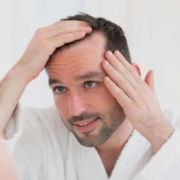
mens hair loss royal-oak mi

Hormones & Men’s Hair Loss

Could Hormones Imbalance be Causing Your Hair Loss?

For many men, hair loss feels like an inevitable part of getting older, something to be accepted rather than understood. Yet the primary driving factor behind most men’s hair loss is hormonal, and that means it can often be evaluated, explained, and addressed. Imbalances in specific hormones directly affect the hair growth cycle, causing follicles to shrink, growth phases to shorten, and shedding to increase.

At Prosperity Health in Royal Oak, board-certified internist and functional medicine specialist Dr. Nishath Hakim looks beyond the surface to the hormonal mechanisms behind men’s hair loss. Using advanced testing, she identifies the imbalances at work and develops effective, personalized plans designed to slow loss and support healthier hair.

Hormones That Cause Men’s Hair Loss

Hair growth in men is governed by a network of hormones, and when these fall out of balance, the follicles feel the effect. Recognizing which hormones contribute to hair loss is essential to understanding why it happens and how it can be managed.

Each of the hormones below influences the hair cycle in a distinct way. Some directly shrink the follicles, while others disrupt the broader hormonal environment that healthy hair depends on. Together they account for the majority of hormonally driven hair loss in men.

Dihydrotestosterone (DHT) & Men’s Hair Loss

Dihydrotestosterone, a byproduct of testosterone, is the main cause of male pattern baldness. In men who are genetically susceptible, DHT binds to the hair follicles and triggers a process known as follicular miniaturization, in which the follicles progressively shrink.

As this miniaturization continues, the affected follicles produce thinner, weaker hairs until they stop producing visible hair altogether. The pattern is familiar: a receding hairline and thinning at the crown that gradually become more pronounced over time.

At Prosperity Health in Royal Oak, Dr. Nishath Hakim assesses DHT activity as a central part of evaluating men’s hair loss. Understanding the role of this hormone allows her to target treatment where it will be most effective.

Thyroid Hormones & Men’s Hair Loss

The thyroid gland regulates metabolism and helps maintain hormonal balance throughout the body. When the thyroid becomes overactive in hyperthyroidism or underactive in hypothyroidism, that balance is disrupted, and the hair often suffers as a result.

Unlike the patterned loss caused by DHT, thyroid-related hair loss tends to be diffuse, producing a widespread thinning across the entire scalp. Because thyroid disorders can develop quietly, this cause is often missed unless specific testing is performed.

Top Royal Oak functional medicine specialist Dr. Nishath Hakim includes thorough thyroid evaluation in her assessment of men’s hair loss. Identifying and correcting a thyroid imbalance can restore normal hair growth and halt diffuse shedding.

High Cortisol & Men’s Hair Loss

Cortisol, widely known as the stress hormone, can contribute to hair loss when it remains elevated over time. Long-term stress and conditions such as adrenal imbalance keep cortisol high, disrupting the body’s normal hormone levels.

This disruption can push hair follicles prematurely into the telogen, or shedding, phase, resulting in increased hair loss. Because the shedding often appears weeks after a stressful period, men may not immediately connect it to the stress that triggered it.

At Prosperity Health in Royal Oak, Dr. Nishath Hakim evaluates the role of cortisol and chronic stress in men’s hair loss. Addressing these factors is an important part of her integrative, whole-person approach.

High Prolactin & Men’s Hair Loss

Prolactin is a hormone most often associated with women, but men produce it as well, and elevated levels can affect the hair. High prolactin can stimulate the production of DHT and directly trigger hair follicle regression.

Because prolactin works partly by amplifying DHT activity, its effects can compound the pattern of loss already driven by that hormone. Testing for prolactin is therefore a valuable part of a complete hormonal evaluation in men experiencing hair loss.

Dr. Nishath Hakim at Prosperity Health in Royal Oak considers prolactin among the hormonal factors that can drive men’s hair loss. Identifying elevated levels allows her to address a cause that is often overlooked.

Insulin & Men’s Hair Loss

Insulin and blood sugar regulation also play a role in hair health. Insulin resistance and chronically high blood sugar can stimulate an enzyme that increases DHT production, accelerating the loss of hair.

This connection links men’s hair loss to broader metabolic health, meaning that improving insulin sensitivity may benefit both the hair and overall wellness. It also underscores why a comprehensive evaluation considers metabolic markers alongside hormones.

At Prosperity Health in Royal Oak, Dr. Nishath Hakim assesses insulin function and metabolic health as part of evaluating men’s hair loss. This broad perspective allows her to address contributing factors that narrower approaches miss.

Identifying Hormone Imbalance Causing Men’s Hair Loss

Determining the hormonal cause of men’s hair loss requires looking at the body’s internal chemistry rather than the scalp alone. Because multiple hormones can be involved, accurate diagnosis depends on detailed, targeted testing.

A thorough evaluation generally includes blood work to measure DHT and testosterone, thyroid hormones, cortisol, prolactin, and markers of insulin function. Interpreting these results in the context of a man’s symptoms and history reveals which imbalances are driving his hair loss.

At Prosperity Health in Royal Oak, Dr. Nishath Hakim relies on advanced laboratory testing to pinpoint the hormonal causes of men’s hair loss. This precise assessment provides the foundation for an effective, individualized plan.

Treating Hormone Imbalance Causing Men’s Hair Loss

With the hormonal cause identified, treatment can focus on restoring balance and protecting the follicles. Because the plan is built around each man’s specific imbalances, the results are more targeted than one-size-fits-all solutions.

Treatment may involve reducing DHT activity, correcting thyroid function, managing cortisol through stress reduction, addressing elevated prolactin, and improving insulin sensitivity through nutrition and lifestyle changes. Functional medicine brings these strategies together into a unified plan that supports both hair and overall health.

Top Royal Oak functional medicine specialist Dr. Nishath Hakim designs personalized treatment plans that target the hormonal roots of men’s hair loss. By restoring internal balance, she helps men slow shedding and support the growth of stronger, healthier hair.

Men’s Hair Loss Treatment | Royal Oak

If you live in Royal Oak and you are noticing a receding hairline or thinning at the crown, the hormonal causes are worth investigating. At Prosperity Health, Dr. Nishath Hakim uses advanced testing and a functional medicine approach to uncover the imbalances behind men’s hair loss and create a plan to address them at the source. Schedule an appointment today and take control of your hair health.

Royal Oak Men’s Hair Loss Treatment:  248-997-4242

womens hair loss treatment royal oak

Hormones & Women’s Hair Loss

Is Your Hair Loss Due to a Hormone Imbalance?

Hair loss in women is often misunderstood, dismissed as a cosmetic concern when it is frequently a signal of something happening deeper within the body. For a significant number of women, the underlying cause is hormonal. Fluctuations or elevated levels of specific hormones can shrink hair follicles and shorten the natural growth cycle, producing the thinning and shedding that so many women find distressing.

At Prosperity Health in Royal Oak, board-certified internist and functional medicine specialist Dr. Nishath Hakim takes a deeper look at the hormonal factors behind women’s hair loss. Rather than treating thinning hair as an isolated symptom, she investigates the hormonal imbalances that drive it, using advanced testing to uncover the root cause and design an effective, personalized plan for restoration.

Hormones That Cause Women’s Hair Loss

Several hormones influence the health and growth of hair, and when any of them fall out of balance, the effects can show up on the scalp. Understanding which hormones are involved is the first step toward identifying why hair loss is occurring and how it can be addressed.

The hair growth cycle depends on a delicate hormonal equilibrium. When that equilibrium is disrupted, follicles can shrink, growth phases can shorten, and shedding can increase. The following hormones are among the most common contributors to women’s hair loss.

Menopause & Women’s Hair Loss

Menopause brings a significant decline in estrogen and progesterone, two hormones that support healthy hair growth. As these protective hormones drop, hair often begins to thin gradually at the crown or along the part line.

The hormonal shift of menopause also allows dihydrotestosterone, or DHT, to accumulate and exert a greater influence on the follicles. This combination of falling estrogen and rising DHT activity explains why so many women notice thinning hair during and after the menopausal transition.

At Prosperity Health in Royal Oak, Dr. Nishath Hakim helps women understand and manage the hormonal changes of menopause. Her functional medicine approach addresses the underlying shifts rather than simply masking the visible thinning.

Polycystic Ovary Syndrome (PCOS) & Women’s Hair Loss

Polycystic ovary syndrome is a common hormonal disorder that often causes an overproduction of androgens, including DHT. This excess of male-pattern hormones can lead to hair loss concentrated at the front of the scalp and around the temples.

According to the American College of Obstetricians and Gynecologists, PCOS is one of the most common hormonal conditions affecting women of reproductive age, and its effects extend well beyond the reproductive system. The androgen excess it produces can disrupt the hair growth cycle and contribute to noticeable thinning.

Top Royal Oak functional medicine specialist Dr. Nishath Hakim evaluates women for PCOS and the hormonal imbalances it creates. By identifying and addressing the underlying androgen excess, she helps patients tackle the true source of their hair loss.

Thyroid Disorders & Women’s Hair Loss

The thyroid gland plays a central role in regulating metabolism and hormone balance, and disruptions in either direction can affect the hair. Both hypothyroidism, an underactive thyroid, and hyperthyroidism, an overactive thyroid, can interfere with the hair cycle.

When thyroid hormones are out of range, the result is often a diffuse thinning that spreads across the entire scalp rather than concentrating in one area. Because thyroid disorders are common in women and can be easily overlooked, testing is an important part of any hair loss evaluation.

At Prosperity Health in Royal Oak, Dr. Nishath Hakim includes comprehensive thyroid assessment in her evaluation of women’s hair loss. Correcting a thyroid imbalance can restore the hair cycle and reduce ongoing shedding.

Pregnancy & Postpartum Women’s Hair Loss

Pregnancy brings high estrogen levels that often prolong the growth phase of the hair, leaving many women with thick, full hair during those months. This benefit, however, is temporary and tied to the hormonal state of pregnancy.

In the postpartum period, estrogen drops sharply, and the hair that was held in an extended growth phase enters shedding all at once. This produces a temporary but often severe shedding known as telogen effluvium, which can be alarming even though it usually resolves on its own over several months.

Dr. Nishath Hakim reassures postpartum patients at Prosperity Health in Royal Oak that this shedding is typically temporary. When recovery is slow or shedding persists, she investigates whether other hormonal factors are at play and provides effective support.

High Cortisol & Women’s Hair Loss

Cortisol, often called the stress hormone, can take a toll on the hair when its levels remain elevated. Chronic stress keeps cortisol high, and this sustained elevation can push hair follicles prematurely into their shedding phase.

The result is temporary shedding that often appears weeks after a period of significant physical or emotional stress. Because the connection between stress and hair loss is delayed, women do not always recognize the link between the two.

At Prosperity Health in Royal Oak, Dr. Nishath Hakim considers the role of cortisol and chronic stress in each patient’s hair loss. Her integrative approach addresses these stress-related hormonal patterns as part of a complete treatment plan.

Identifying Hormone Imbalance Causing Women’s Hair Loss

Pinpointing the hormonal cause of women’s hair loss requires looking beyond the scalp to the body’s internal chemistry. Because so many hormones can contribute, accurate diagnosis depends on thorough, targeted testing rather than guesswork.

A comprehensive evaluation typically includes blood work to assess thyroid function, androgen levels, estrogen and progesterone, cortisol, and markers of insulin function. Reviewing these results alongside a patient’s history and symptoms allows for an accurate picture of what is driving the hair loss.

At Prosperity Health in Royal Oak, Dr. Nishath Hakim uses advanced laboratory testing to identify the precise hormonal imbalances behind each woman’s hair loss. This detailed assessment forms the foundation for an effective, individualized treatment strategy.

Treating Hormone Imbalance Causing Women’s Hair Loss

Once the hormonal cause has been identified, treatment can be directed at restoring balance and supporting healthy hair growth. Because the approach is tailored to the specific imbalance, results tend to be more meaningful and lasting than generic remedies.

Treatment may involve correcting thyroid function, addressing androgen excess, supporting healthy estrogen and progesterone levels, managing cortisol through stress reduction, and improving insulin sensitivity through targeted nutrition and lifestyle changes. Functional medicine combines these strategies into a cohesive plan that addresses the whole person.

Top Royal Oak functional medicine specialist Dr. Nishath Hakim creates personalized treatment plans that target the hormonal roots of women’s hair loss. By restoring internal balance, she helps women not only slow shedding but support the regrowth of healthier hair.

Women’s Hair Loss | Royal Oak

If you live in Royal Oak and you are concerned about thinning or shedding hair, the hormonal causes deserve a closer look. At Prosperity Health, Dr. Nishath Hakim uses advanced testing and a functional medicine approach to uncover the imbalances behind women’s hair loss and design a plan to restore both balance and hair health. Schedule an appointment today and take the first step toward understanding and treating the root cause.

Royal Oak Women’s Hair Loss Treatment:  248-997-4242

erectile dysfunction treatment troy mi

Men’s Concierge Doctors Restore Health, Energy, Hair Growth & Sexual Performance

Men in the Birmingham, MI Area Choose Concierge Doctors

Most men are accustomed to treating health concerns in isolation – seeing one doctor for cardiovascular symptoms, another for fatigue, and perhaps a specialist for sexual health. The result is fragmented care that addresses symptoms without ever confronting the underlying physiological causes connecting them. A men’s concierge doctor takes an entirely different approach: one physician, one relationship, and a comprehensive understanding of the whole man – his hormones, his cardiovascular health, his metabolism, his lifestyle, and his goals. At Prosperity Health in the Birmingham, MI area, board-certified internist and functional medicine specialist Dr. Nishath Hakim, MD offers an exceptional concierge medicine experience designed to help men reclaim their vitality, health, and performance at every level.

Dr. Hakim understands that the symptoms men most commonly struggle with – fatigue, weight gain, thinning hair, reduced libido, and declining cardiovascular fitness – are rarely isolated problems. In the vast majority of cases, they share common roots: hormonal imbalances, metabolic dysfunction, chronic inflammation, nutritional deficiencies, or the cumulative effects of years of conventional care that managed symptoms rather than resolving their causes. As both a board-certified internist and a functional medicine specialist, Dr. Hakim brings a uniquely comprehensive approach to men’s health – combining advanced diagnostics with evidence-based integrative treatments and genuine, unhurried attention to each patient’s individual health story.

What Is a Men’s Concierge Doctor?

A concierge doctor operates outside the constraints of the traditional insurance-driven medical model, offering patients direct, personalized access to their physician with significantly more time and individualized attention than is possible in a conventional practice. Concierge medicine membership typically includes extended appointment times, same-day or next-day access, direct physician communication, and a level of care continuity that allows a men’s concierge doctor to truly know each patient – not just their chart. For men managing multiple health concerns or committed to proactive, prevention-focused care, the concierge model is profoundly different from anything available in standard medicine. At Prosperity Health in the Birmingham, MI area, Dr. Nishath Hakim’s concierge practice is built on the principle that men deserve a physician who has both the time to understand them fully and the expertise to treat them comprehensively.

Concierge Doctors Treat the Whole Man

Dr. Nishath Hakim practices integrative, functional medicine – a model that focuses on identifying and treating the root causes of illness rather than simply managing symptoms as they arise. Where conventional medicine often intervenes only after disease has established itself, Dr. Hakim’s approach at Prosperity Health uses advanced laboratory testing, detailed health history review, and a deep understanding of the body’s interconnected systems to identify imbalances long before they become diagnoses. This means that our patients don’t just receive treatment for what is wrong today – they receive a proactive, personalized health strategy designed to support energy, longevity, performance, and disease prevention over the long term. For men in the Birmingham, MI area, Prosperity Health offers a men’s concierge doctor experience that is genuinely different from anything available in conventional medicine.

Restore Heart Health with a Men’s Concierge Doctor

Cardiovascular disease remains the leading cause of death among men in the United States, according to the Centers for Disease Control and Prevention – and yet most men receive only surface-level cardiovascular screening in a standard primary care setting. A men’s concierge doctor can go significantly further, using advanced lipid panels, inflammatory markers, arterial health assessments, and metabolic testing to identify cardiovascular risk factors years before they manifest as clinical events. At Prosperity Health in the Birmingham, MI area, Dr. Hakim integrates cardiovascular health monitoring seamlessly into each patient’s overall care plan, combining lifestyle optimization, nutritional guidance, and targeted medical interventions to support a heart that performs as strongly as the rest of the man.

Improve Energy with a Men’s Concierge Doctor

Chronic fatigue is one of the most common concerns Dr. Hakim hears from male patients – and one of the most frequently dismissed by conventional medicine as an inevitable part of aging. In reality, persistent low energy in men almost always has identifiable physiological causes: suboptimal testosterone levels, thyroid dysfunction, adrenal dysregulation, chronic sleep disruption, nutritional deficiencies, or unrecognized metabolic imbalances. A men’s concierge doctor has both the time and the diagnostic tools to investigate these causes systematically rather than attributing fatigue to age alone. At Prosperity Health in the Birmingham, MI area, Dr. Nishath Hakim uses comprehensive laboratory panels and functional medicine principles to uncover and address the specific factors draining each patient’s energy – and to restore the vitality that men too often assume is simply lost to time.

Renew Hair Growth with a Men’s Concierge Doctor

Hair loss affects the majority of men to some degree by middle age, and while it is often treated as a cosmetic issue, it can carry meaningful effects on confidence and self-perception. At Prosperity Health, Dr. Hakim addresses hair loss from two complementary directions. Internally, hormonal assessment and optimization – including testosterone and DHT management – addresses the hormonal drivers of male pattern hair loss at their source. Externally, platelet-rich plasma (PRP) therapy delivers a concentrated solution of the patient’s own growth factors directly into the scalp, stimulating dormant follicles and extending the active growth phase of the hair cycle. Multiple clinical studies have supported PRP as an effective, natural approach to improving hair density and thickness. Men’s concierge doctor Dr. Hakim at Prosperity Health in the Birmingham, MI area integrates both approaches for hair restoration results that are scientifically grounded and genuinely noticeable.

Improve Sexual Performance with a Men’s Concierge Doctor

Declining libido and changes in sexual function are among the most personally significant health concerns men face – and among the most underreported, because many men feel reluctant to raise them in a conventional medical setting. A men’s concierge doctor provides the relationship-based, judgment-free environment in which these concerns can be addressed openly and thoroughly. At Prosperity Health in the Birmingham, MI area, Dr. Nishath Hakim evaluates sexual health comprehensively – assessing testosterone levels, cardiovascular function, metabolic health, and contributing lifestyle factors together. Bioidentical testosterone replacement therapy (BHRT), when clinically indicated, can significantly restore libido, improve erectile function, and enhance energy and mood in men with documented hormonal decline. Dr. Hakim tailors every hormone optimization protocol precisely to the individual patient, monitoring closely and adjusting as needed for both safety and lasting results.

Men’s Concierge Doctor | Birmingham, MI Area

Schedule a Men’s Concierge Medicine Appointment at Prosperity Health

If you are ready for a level of health care that treats you as an individual rather than a collection of symptoms – one that invests in your vitality, your performance, and your long-term wellbeing with genuine expertise and attention – it is time to experience concierge medicine at Prosperity Health.

Dr. Nishath Hakim brings board-certified internal medicine and an expertise in hormone balancing to every patient relationship, offering men in the Birmingham, MI area something rare: a physician who truly understand their medical issues, and the comprehensive tools to help them thrive. Schedule an appointment today and take the first step toward the health, energy and sexual vitality you deserve.

Birmingham, MI Men’s Concierge Doctor:  248-997-4242

prp microneedling royal oak southfield mi

PRP Microneedling: Natural Anti Aging without Surgery or Side Effects

PRP Microneedling Naturally Rejuvenates Skin & Hair for a Younger You!

In a world filled with injectable fillers, laser treatments, and surgical facelifts, many patients are searching for a more natural approach to turning back the clock. PRP microneedling — also known as the “vampire facial” — offers exactly that. This innovative treatment harnesses the body’s own healing mechanisms to rejuvenate skin, tighten tissue, and even restore thinning hair, all without synthetic chemicals or surgical incisions.

PRP microneedling combines two powerful regenerative techniques into one treatment, delivering results that continue to improve for months as the body’s natural repair processes take effect. At Prosperity Health in the Southfield, MI area, board-certified Internist and functional medicine specialist Dr. Nishath Hakim, MD offers PRP microneedling as a safe, effective, and completely natural anti aging solution for patients who want real results without compromise.

What Is PRP Microneedling?

PRP stands for platelet-rich plasma — a concentrated preparation derived from a patient’s own blood. To obtain PRP, a small blood sample is drawn and placed in a centrifuge, which separates the blood into its components. The resulting platelet-rich plasma contains a high concentration of growth factors, cytokines, and healing proteins that the body naturally uses to repair damaged tissue and stimulate cellular regeneration.

Microneedling, also called collagen induction therapy, uses a device fitted with fine, sterile needles to create thousands of tiny, controlled micro-injuries in the skin’s surface. These micro-channels trigger the body’s wound-healing response, prompting increased production of collagen and elastin — the two proteins responsible for keeping skin firm, smooth, and youthful. When PRP is applied immediately after microneedling, the growth factors penetrate deeply through the micro-channels, amplifying the regenerative process.

At Prosperity Health in the Southfield, MI area, PRP microneedling specialist Nishath Hakim, MD performs each treatment with precision and care, ensuring that patients receive optimal results in a comfortable, safe clinical environment.

How PRP Microneedling Works to Rejuvenate from Within

The power of PRP microneedling lies in the synergy between the two techniques. Microneedling alone stimulates collagen production, but when combined with concentrated growth factors in PRP, the results are substantially enhanced. A study published in the Journal of Cutaneous and Aesthetic Surgery found that microneedling combined with PRP produced significantly greater improvements in skin texture and wrinkle reduction compared to microneedling alone.

Once the PRP is applied to the micro-channels, the growth factors signal the body to increase collagen synthesis, promote new blood vessel formation, and accelerate cellular turnover. This process unfolds gradually over weeks and months, meaning results continue to improve long after the session is complete. Most patients begin to notice visible improvements within two to four weeks, with optimal results appearing after a series of treatments.

PRP microneedling specialist Nishath Hakim, MD at Prosperity Health in the Southfield, MI area explains to her patients that because PRP microneedling works with the body’s own biology, the results look completely natural — never overdone or artificial.

PRP Microneedling for Skin Rejuvenation

One of the most popular applications of PRP microneedling is facial skin rejuvenation. Patients who are concerned about fine lines, uneven skin tone, enlarged pores, acne scars, or dull and tired-looking skin can see dramatic improvements without the extended downtime of laser resurfacing or the potential side effects of injectable fillers. PRP microneedling stimulates the skin to renew itself from within, producing fresh collagen that smooths texture, brightens complexion, and restores a youthful radiance.

Unlike fillers, which add volume artificially and require repeated maintenance, PRP microneedling encourages the skin to rebuild its own structural support. Results are not only natural-looking but also long-lasting. Because the treatment uses the patient’s own blood products, there is virtually no risk of allergic reaction or adverse side effects — a significant advantage over synthetic dermal fillers.

At Prosperity Health in the Southfield, MI area, PRP microneedling specialist Nishath Hakim, MD has helped many patients achieve smoother, more luminous skin through PRP microneedling — restoring confidence without fillers, lasers, or lengthy recovery periods.

PRP Microneedling for Skin Tightening

Sagging skin and loss of firmness are among the most frustrating signs of aging, and they often drive patients to consider surgical facelifts or neck lifts. However, PRP microneedling offers a noninvasive alternative for mild to moderate skin laxity. By stimulating deep collagen and elastin production, PRP microneedling helps restore the skin’s structural integrity, resulting in a firmer, more lifted appearance — without a single incision.

The collagen remodeling triggered by PRP microneedling continues for several months after treatment, meaning skin tightening results develop gradually and naturally. Clinical data published in Dermatologic Surgery has shown that PRP-enhanced microneedling produces measurable improvements in skin elasticity, particularly in areas prone to laxity such as the jawline, neck, and under-eye area.

PRP microneedling specialist Nishath Hakim, MD at Prosperity Health in the Southfield, MI area recommends PRP microneedling for patients who want to address skin laxity proactively — tightening and firming before more invasive measures become necessary.

PRP Microneedling for Hair Loss

PRP microneedling isn’t limited to facial rejuvenation — it has also shown remarkable promise for hair loss. When applied to the scalp, PRP delivers concentrated growth factors directly to hair follicles, stimulating dormant follicles, increasing blood supply, and promoting thicker, healthier growth. A meta-analysis published in the Journal of Cosmetic Dermatology found that PRP therapy significantly increased hair density and thickness in patients with androgenetic alopecia.

Unlike pharmaceutical hair loss treatments such as finasteride, which can carry side effects including hormonal disruption, PRP microneedling for hair loss is completely natural and free of systemic side effects. The treatment uses only the patient’s own growth factors, making it one of the safest options available for both men and women experiencing thinning hair.

At Prosperity Health in the Southfield, MI area, PRP microneedling specialist Nishath Hakim, MD offers scalp PRP microneedling as part of a comprehensive approach to hair loss. Dr. Nishath Hakim evaluates the underlying causes of each patient’s hair thinning — including hormonal factors — and incorporates PRP microneedling into a holistic restoration plan.

Benefits of PRP Microneedling for Every Skin Type

One of the most significant advantages of PRP microneedling is its safety profile. Because the treatment relies on the patient’s own blood-derived growth factors, there is virtually no risk of allergic reaction or adverse side effects. PRP microneedling is also safe for all skin types and tones — including darker skin tones that may carry a higher risk of hyperpigmentation with laser-based treatments. This makes PRP microneedling one of the most inclusive anti aging treatments available.

The results of PRP microneedling are also uniquely long-lasting because they are driven by the body’s own regenerative processes. Unlike treatments that provide an immediate but temporary effect, the collagen and elastin produced through PRP microneedling become a permanent part of the skin’s structure. With a recommended series of treatments and periodic maintenance, patients can enjoy sustained improvements in skin quality, firmness, and youthfulness.

PRP Microneedling | Southfield, MI Area

If you’re looking for a way to rejuvenate your skin, tighten sagging tissue, or restore thinning hair — all without surgery or harsh side effects — PRP microneedling may be the ideal solution. This treatment works with your body’s own healing power to deliver natural, lasting results that continue to improve over time.

If you live in the Southfield, MI area and you’re ready to explore what PRP microneedling can do for you, schedule an appointment with PRP microneedling specialist Nishath Hakim, MD at Prosperity Health. Dr. Nishath Hakim and her team will evaluate your concerns, explain the treatment process, and develop a personalized plan to help your skin and hair achieve a refreshed, youthful appearance — naturally.

Southfield, MI Area PRP Microneedling:  248-997-4242