
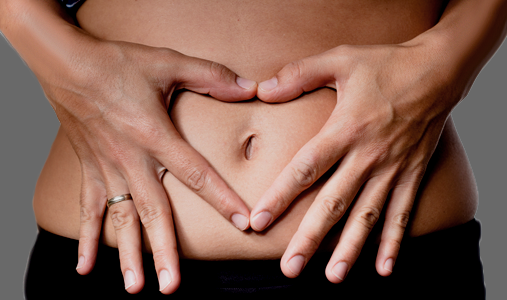
Tummy Trouble? Perimenopause Can Trigger Digestion Issues
Shifting Hormones Disrupt the Gut – a Perimenopause Doctor Can Help
Many women who have always been able to eat what they want find that their stomach becomes more sensitive in their 40s. But while hot flashes, irregular cycles, mood shifts are the symptoms that most people associate with menopause, digestive problems are not something most women expect when perimenopause begins. However, many women entering perimenopause are quietly struggling with bloating that appears without explanation, digestive discomfort that was never present before, and new sensitivities to foods they have eaten comfortably for decades.
These changes in digestion are often the direct result of the profound hormonal fluctuations that define perimenopause – and they deserve the same medical attention as any other symptom of perimenopause or menpopause. At Prosperity Health in the Southfield, MI area, perimenopause expert Dr. Nishath Hakim, MD specializes in identifying and treating the gut health disruptions that accompany hormonal change, offering relief that conventional medicine too frequently overlooks.
Unfortunately, understanding the relationship between hormones and gut function is a connection most conventional physicians are not trained to explore in depth. However, this whole body approach is central to functional medicine.
Estrogen, progesterone, and cortisol, all of which fluctuate dramatically during perimenopause, have direct and measurable effects on gastrointestinal motility, intestinal permeability, gut microbiome composition, and the immune activity within the digestive tract. When these hormones shift, the gut shifts with them. At Prosperity Health, Dr. Hakim brings a comprehensive functional medicine approach to perimenopause care that evaluates gut health alongside hormonal health.
How Perimenopause Shifts Your Gut Microbiome
The gut microbiome – the vast community of microorganisms living in the digestive tract – is not a static ecosystem. It responds continuously to diet, stress, medications, and, critically, hormonal status. Research has increasingly established that estrogen plays an active role in regulating microbiome composition through a pathway known as the estrobolome: a collection of gut bacteria that metabolize and recirculate estrogen throughout the body. As estrogen levels become erratic and eventually decline during perimenopause, this system is disrupted – and the resulting dysbiosis can contribute to inflammation, bloating, altered bowel habits, and a host of digestive complaints that emerge without apparent explanation. Perimenopause doctor Dr. Nishath Hakim at Prosperity Health in the Southfield, MI area uses advanced GI-MAP stool testing to assess each patient’s gut microbiome in clinical detail, identifying specific imbalances and inflammatory markers that standard laboratory panels never evaluate.
Perimenopause, Bloating & IBS-Like Symptoms
For many women, perimenopause marks the sudden onset of bloating, cramping, gas, or irregular bowel habits indistinguishable from irritable bowel syndrome. In many cases, they are not IBS at all – they are the gastrointestinal consequences of hormonal fluctuation. Progesterone, which affects smooth muscle tone throughout the body, directly influences the pace at which food moves through the digestive tract. As progesterone levels decline and destabilize during perimenopause, transit time can slow markedly, leading to constipation, bloating, and the buildup of intestinal gas. Estrogen fluctuations, meanwhile, increase visceral sensitivity, making the gut more reactive to normal digestive processes. The result is a pattern of symptoms that can be misdiagnosed or dismissed entirely. At Prosperity Health in the Southfield, MI area, Dr. Hakim evaluates these symptoms in their full hormonal context, addressing both the gut and the perimenopause driving its disruption.
New Food Sensitivities & Intolerances During Perimenopause
One of the most disorienting aspects of perimenopausal gut disruption is the emergence of new food intolerances – reactions to foods tolerated comfortably for years or even decades. Lactose intolerance appearing in midlife, sudden sensitivity to gluten or cruciferous vegetables, or difficulty with high-FODMAP foods are all commonly reported by women in perimenopause. The mechanism is multifactorial: declining estrogen compromises the integrity of the intestinal lining, increasing permeability and allowing incompletely digested proteins to trigger immune responses. Simultaneously, shifts in gut microbiome composition reduce production of the enzymes and short-chain fatty acids that support proper digestion and food tolerance. At Prosperity Health in the Southfield, MI area, perimenopause doctor Dr. Nishath Hakim uses comprehensive food intolerance testing to identify specific dietary triggers and create personalized guidance that supports gut healing alongside hormonal treatment.
Inflammation, Nutrient Deficiencies & Perimenopause
Estrogen carries well-documented anti-inflammatory properties throughout the body – including within the gut. As estrogen levels decline during perimenopause, the body’s inflammatory baseline rises, and the gut is frequently among the first places this shift becomes apparent. Increased gut inflammation worsens bloating and digestive discomfort, impairs nutrient absorption, and contributes to the systemic inflammation underlying many of the chronic health conditions – including cardiovascular disease and metabolic dysfunction – that become more prevalent after menopause. Identifying and addressing gut inflammation during perimenopause is not just about digestive comfort – it is an investment in long-term health. At Prosperity Health, Dr. Hakim integrates micronutrient testing into every perimenopause evaluation to identify specific deficiencies – including magnesium, zinc, vitamin D, and B vitamins – that impair gut barrier function and amplify inflammation during this critical hormonal transition.
Perimenopause Doctors CAn Restore Gut Health & Hormonal Balance
Treating the gut disruptions of perimenopause effectively requires addressing both the gut and the hormonal environment destabilizing it. At Prosperity Health in the Southfield, MI area, Dr. Nishath Hakim uses a multi-layered approach that begins with comprehensive testing – GI-MAP stool analysis, food intolerance testing, micronutrient panels, and detailed hormonal evaluation – to establish a precise clinical picture of each patient’s situation. Treatment is then personalized and may include gut microbiome rebalancing through targeted probiotic and prebiotic protocols; bioidentical hormone therapy to restore estrogen and progesterone to levels that support gut integrity and motility; targeted nutritional supplementation to address identified deficiencies; and dietary modification guided by individual food intolerance results. Rather than managing one symptom at a time, Dr. Hakim treats the underlying system – giving the body the conditions it needs to heal the gut as hormones are brought back into balance.
Perimenopause Doctor | Southfield, MI Area
Schedule Your Perimenopause Evaluation at Prosperity Health
If you are experiencing new bloating, digestive discomfort, food sensitivities, or bowel changes during perimenopause, you do not have to accept them as an inevitable part of getting older. These symptoms have identifiable causes – and they are treatable. Perimenopause doctor Nishath Hakim, MD at Prosperity Health in the Southfield, MI area offers the comprehensive testing and personalized, integrative treatment that addresses both your hormones and your gut with genuine clinical precision. Schedule an appointment today and take the first step toward feeling comfortable, energized, and like yourself again – at every age.