
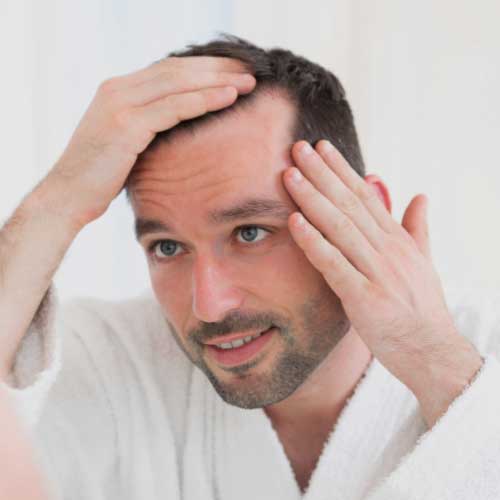
Hormones & Men’s Hair Loss
Could Hormones Imbalance be Causing Your Hair Loss?
For many men, hair loss feels like an inevitable part of getting older, something to be accepted rather than understood. Yet the primary driving factor behind most men’s hair loss is hormonal, and that means it can often be evaluated, explained, and addressed. Imbalances in specific hormones directly affect the hair growth cycle, causing follicles to shrink, growth phases to shorten, and shedding to increase.
At Prosperity Health in Royal Oak, board-certified internist and functional medicine specialist Dr. Nishath Hakim looks beyond the surface to the hormonal mechanisms behind men’s hair loss. Using advanced testing, she identifies the imbalances at work and develops effective, personalized plans designed to slow loss and support healthier hair.
Hormones That Cause Men’s Hair Loss
Hair growth in men is governed by a network of hormones, and when these fall out of balance, the follicles feel the effect. Recognizing which hormones contribute to hair loss is essential to understanding why it happens and how it can be managed.
Each of the hormones below influences the hair cycle in a distinct way. Some directly shrink the follicles, while others disrupt the broader hormonal environment that healthy hair depends on. Together they account for the majority of hormonally driven hair loss in men.
Dihydrotestosterone (DHT) & Men’s Hair Loss
Dihydrotestosterone, a byproduct of testosterone, is the main cause of male pattern baldness. In men who are genetically susceptible, DHT binds to the hair follicles and triggers a process known as follicular miniaturization, in which the follicles progressively shrink.
As this miniaturization continues, the affected follicles produce thinner, weaker hairs until they stop producing visible hair altogether. The pattern is familiar: a receding hairline and thinning at the crown that gradually become more pronounced over time.
At Prosperity Health in Royal Oak, Dr. Nishath Hakim assesses DHT activity as a central part of evaluating men’s hair loss. Understanding the role of this hormone allows her to target treatment where it will be most effective.
Thyroid Hormones & Men’s Hair Loss
The thyroid gland regulates metabolism and helps maintain hormonal balance throughout the body. When the thyroid becomes overactive in hyperthyroidism or underactive in hypothyroidism, that balance is disrupted, and the hair often suffers as a result.
Unlike the patterned loss caused by DHT, thyroid-related hair loss tends to be diffuse, producing a widespread thinning across the entire scalp. Because thyroid disorders can develop quietly, this cause is often missed unless specific testing is performed.
Top Royal Oak functional medicine specialist Dr. Nishath Hakim includes thorough thyroid evaluation in her assessment of men’s hair loss. Identifying and correcting a thyroid imbalance can restore normal hair growth and halt diffuse shedding.
High Cortisol & Men’s Hair Loss
Cortisol, widely known as the stress hormone, can contribute to hair loss when it remains elevated over time. Long-term stress and conditions such as adrenal imbalance keep cortisol high, disrupting the body’s normal hormone levels.
This disruption can push hair follicles prematurely into the telogen, or shedding, phase, resulting in increased hair loss. Because the shedding often appears weeks after a stressful period, men may not immediately connect it to the stress that triggered it.
At Prosperity Health in Royal Oak, Dr. Nishath Hakim evaluates the role of cortisol and chronic stress in men’s hair loss. Addressing these factors is an important part of her integrative, whole-person approach.
High Prolactin & Men’s Hair Loss
Prolactin is a hormone most often associated with women, but men produce it as well, and elevated levels can affect the hair. High prolactin can stimulate the production of DHT and directly trigger hair follicle regression.
Because prolactin works partly by amplifying DHT activity, its effects can compound the pattern of loss already driven by that hormone. Testing for prolactin is therefore a valuable part of a complete hormonal evaluation in men experiencing hair loss.
Dr. Nishath Hakim at Prosperity Health in Royal Oak considers prolactin among the hormonal factors that can drive men’s hair loss. Identifying elevated levels allows her to address a cause that is often overlooked.
Insulin & Men’s Hair Loss
Insulin and blood sugar regulation also play a role in hair health. Insulin resistance and chronically high blood sugar can stimulate an enzyme that increases DHT production, accelerating the loss of hair.
This connection links men’s hair loss to broader metabolic health, meaning that improving insulin sensitivity may benefit both the hair and overall wellness. It also underscores why a comprehensive evaluation considers metabolic markers alongside hormones.
At Prosperity Health in Royal Oak, Dr. Nishath Hakim assesses insulin function and metabolic health as part of evaluating men’s hair loss. This broad perspective allows her to address contributing factors that narrower approaches miss.
Identifying Hormone Imbalance Causing Men’s Hair Loss
Determining the hormonal cause of men’s hair loss requires looking at the body’s internal chemistry rather than the scalp alone. Because multiple hormones can be involved, accurate diagnosis depends on detailed, targeted testing.
A thorough evaluation generally includes blood work to measure DHT and testosterone, thyroid hormones, cortisol, prolactin, and markers of insulin function. Interpreting these results in the context of a man’s symptoms and history reveals which imbalances are driving his hair loss.
At Prosperity Health in Royal Oak, Dr. Nishath Hakim relies on advanced laboratory testing to pinpoint the hormonal causes of men’s hair loss. This precise assessment provides the foundation for an effective, individualized plan.
Treating Hormone Imbalance Causing Men’s Hair Loss
With the hormonal cause identified, treatment can focus on restoring balance and protecting the follicles. Because the plan is built around each man’s specific imbalances, the results are more targeted than one-size-fits-all solutions.
Treatment may involve reducing DHT activity, correcting thyroid function, managing cortisol through stress reduction, addressing elevated prolactin, and improving insulin sensitivity through nutrition and lifestyle changes. Functional medicine brings these strategies together into a unified plan that supports both hair and overall health.
Top Royal Oak functional medicine specialist Dr. Nishath Hakim designs personalized treatment plans that target the hormonal roots of men’s hair loss. By restoring internal balance, she helps men slow shedding and support the growth of stronger, healthier hair.
Men’s Hair Loss Treatment | Royal Oak
If you live in Royal Oak and you are noticing a receding hairline or thinning at the crown, the hormonal causes are worth investigating. At Prosperity Health, Dr. Nishath Hakim uses advanced testing and a functional medicine approach to uncover the imbalances behind men’s hair loss and create a plan to address them at the source. Schedule an appointment today and take control of your hair health.