
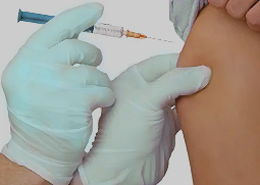
Shingles Vaccine Shown to Reduce Risk of Dementia & Heart Attack & Slow Aging
Shingle Vaccination May Improve Health & Longevity for Years to Come
Conventional medicine tends to divide the body into territories. Cardiology takes the heart, neurology takes the brain, dermatology takes the skin, and each specialty works within its own borders. That arrangement is administratively tidy, but it describes nothing about how human physiology behaves.
Functional medicine begins from the opposite premise, and the research on the shingles vaccine illustrates why that premise holds. Inflammation generated in one place circulates everywhere, an immune system under sustained pressure ages every organ it serves, and a chronic viral infection held in check by the nervous system exacts a cost that is paid throughout the body. Recent findings have become one of the clearest demonstrations of that principle.
Findings published over the past several years indicate that the shingles vaccine does considerably more than prevent a painful rash. Large studies have connected it to a meaningfully lower risk of dementia, fewer heart attacks and strokes, and slower biological aging at the cellular level. Dr. Nishath Hakim, a board-certified internist and functional medicine specialist at Prosperity Health, reviews vaccination status with patients for exactly these reasons.
Shingles Vaccine May Lower Dementia Risk
The most striking evidence concerns cognitive decline. Research published in the journal Nature took advantage of a vaccination program in Wales that made eligibility depend on date of birth, creating two nearly identical populations separated only by whether they could receive the vaccine. Adults who were vaccinated developed dementia at a rate roughly twenty percent lower over the following years.
That design matters. Because eligibility for the shingles vaccine was determined by an arbitrary birthdate cutoff rather than by health status or motivation, the comparison avoids the usual objection that people who seek vaccination are simply healthier to begin with.
Additional research suggests the benefit of the shingles vaccine may extend to patients who already carry a dementia diagnosis, with evidence of slower progression and lower mortality among those who have been vaccinated. Work in this area is ongoing and the findings continue to be examined.
The proposed mechanism is inflammatory. The varicella zoster virus never leaves the body after chickenpox, remaining dormant in nerve tissue for decades. When it reactivates, it inflames nerves directly, and researchers believe repeated or subclinical reactivation contributes to the neuroinflammation that accompanies cognitive decline. Suppressing the virus reduces that burden.
Shingles Vaccine May Reduce Heart Attacks
Cardiovascular findings surrounding the shingles vaccine have been similarly notable. Data presented through the American College of Cardiology indicate that vaccinated adults over fifty were forty-six percent less likely to experience a major adverse cardiac event than their unvaccinated counterparts.
Broken into specific outcomes, recipients of the shingles vaccine showed a thirty-two percent lower risk of heart attack, a twenty-five percent lower risk of stroke, and a twenty-five percent lower risk of developing heart failure.
The explanation again runs through inflammation, which is where the shingles vaccine appears to do its work. Atherosclerotic plaque becomes dangerous when inflammatory activity destabilizes it, and viral reactivation raises inflammatory signaling throughout the vascular system. Shingles episodes have been independently associated with elevated stroke risk in the weeks that follow, which supports the same causal thread.
For patients being counseled on cardiovascular risk, this places the shingles vaccine alongside blood pressure control and lipid management rather than in an unrelated category of routine immunization. It is an uncommon situation in medicine, in which a single low-risk intervention appears to influence outcomes across several organ systems at once.
Shingles Vaccine Shown to Slow Biological Aging
The third area of research moves past specific diseases to the pace of aging itself, and here the shingles vaccine has produced some of its most intriguing findings. Chronological age and biological age diverge, sometimes considerably, and the difference is largely a function of accumulated inflammation. Researchers have given the phenomenon the name inflammaging to describe the low-grade inflammatory state that builds with the years and drives much of what is recognized as age-related decline.
Investigators at the USC Leonard Davis School of Gerontology have connected the shingles vaccine to reduced chronic inflammation of precisely this kind. Vaccinated adults show more favorable epigenetic and transcriptomic aging markers than unvaccinated peers, meaning their cells display patterns of gene expression and chemical modification characteristic of younger tissue.
Epigenetic and transcriptomic markers are among the most useful tools available for assessing whether an intervention affects the aging process rather than a single disease. Their improvement following vaccination suggests the benefit operates at a systemic level, which would account for effects appearing simultaneously in the brain and the cardiovascular system.
Who Should Get Shingles Vaccine?
The recombinant zoster vaccine, marketed as Shingrix, is approved and recommended for all adults aged fifty and older, given as two doses separated by two to six months. Adults nineteen and older who are immunocompromised or receiving immunosuppressive therapy are also advised to be vaccinated.
Prior shingles infection is not a reason to skip the shingles vaccine, since the virus remains dormant and can reactivate again. Patients who received the older Zostavax vaccine are advised to complete the newer series, which provides substantially greater and more durable protection.
Side effects are common but generally short-lived, most often soreness at the injection site, fatigue, muscle aches, or a low-grade fever for a day or two. Patients frequently find it reassuring to know that this reaction reflects the immune system responding as intended rather than a sign of illness, and scheduling the second dose when a day of rest is available makes the series easier to complete.
Dr. Nishath Hakim reviews the shingles vaccine within the context of a patient’s complete picture, including cardiovascular risk, family history of cognitive decline, immune status, and current medications, rather than treating it as a box to be checked at a certain birthday.
Functional Medicine | Nishath Hakim, MD | Royal Oak
The lessons found in this latest shingles vaccine research is promising. and it confirms that your heart, your brain, your immune system, and your metabolism are not separate systems to be managed separately by separate people. Lowering chronic inflammation in one place tends to pay dividends in several others, and interventions that improve inflammation in one area can have wide reaching and long lasting effects on health and longevity.
Functional medicine is built around treating the body as a whole. Dr. Nishath Hakim at Prosperity Health in Royal Oak evaluates the whole person, identifies where inflammation and dysfunction are originating, and assembles a plan that addresses causes rather than isolated symptoms. To discuss your own risk factors and what a whole-person, functional medicine approach would look like for you, schedule an appointment at Prosperity Health today.