
Look Younger with PRP Facials
PRP Facials Work With Your Body to Reduce Wrinkles & Tighten Skin
The aesthetic world is full of treatments that introduce something foreign into the skin, whether that is a filler, a neurotoxin, or a synthetic stimulant. PRP facials take the opposite approach entirely. They use a concentrated preparation made from the patient’s own blood to prompt the skin to rebuild itself.
That distinction appeals to a lot of people. Rather than filling a line or freezing a muscle, PRP facials work with the skin’s existing repair machinery, encouraging it to produce the collagen and elastin it has gradually stopped making on its own.
At Prosperity Health in the Troy, MI area, functional medicine doctor Nishath Hakim offers PRP facials as part of an approach that treats skin health as an extension of overall health rather than as a purely cosmetic concern. For patients who want visible improvement without introducing anything synthetic, it is often exactly the right fit.
What Are PRP Facials?
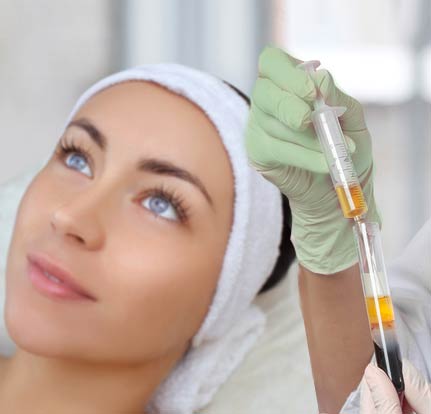
PRP stands for platelet-rich plasma. The process begins with a small blood draw, much like a routine lab test, taken from the patient’s arm at the start of the appointment.
That sample is placed in a centrifuge, which spins rapidly to separate the blood into its component layers. The platelets and plasma are concentrated and drawn off, while the red blood cells are discarded.
The resulting platelet-rich plasma is then applied to the face and driven into the skin, most commonly using microneedling to create thousands of microscopic channels that allow the preparation to reach the deeper layers where it can do its work. The entire appointment generally takes under an hour, and a topical numbing cream applied beforehand keeps the microneedling portion comfortable for most patients.
Because the material comes from the patient’s own body, there is nothing to be allergic to and nothing artificial left behind. Dr. Hakim at Prosperity Health in the Troy, MI area walks each patient through the full process at their first visit so there are no surprises on treatment day.
The Science Behind PRP Facials
Platelets are best known for their role in clotting, but that is only part of what they do. They are also storage vessels for a remarkable collection of growth factors, the signaling proteins the body uses to coordinate tissue repair.
Among them are platelet-derived growth factor, transforming growth factor beta, vascular endothelial growth factor, and epidermal growth factor. Between them, these compounds recruit repair cells to the area, stimulate new collagen production, encourage the formation of small blood vessels, and support the turnover of surface skin cells.
In ordinary circumstances these growth factors are released only when tissue is injured. PRP facials essentially deliver a concentrated dose of that repair signal to skin that is not injured but has simply slowed down with age.
The concentration is what makes the difference. Platelet-rich plasma typically contains several times the platelet density of ordinary circulating blood, which means the skin receives a repair signal far stronger than anything it would generate on its own.
Platelet-rich plasma has been used for years in orthopedics and sports medicine for exactly this reason. At Prosperity Health in the Troy, MI area, functional medicine doctor Nishath Hakim applies the same regenerative principle to facial skin.
How PRP Facials Reduce Wrinkles
Fine lines and wrinkles form largely because the dermis loses structural protein over time. Collagen production declines steadily from the twenties onward, and the loss accelerates sharply in the years surrounding menopause.
PRP facials address that shortage at its source. The growth factors delivered into the dermis signal fibroblasts, the cells responsible for manufacturing collagen, to become active again and begin laying down new structural tissue.
This is why results build gradually rather than appearing overnight. Most patients notice improved texture within a few weeks, with the more meaningful softening of fine lines emerging over the following two to three months as new collagen matures and organizes itself.
It is worth being clear about what PRP facials do and do not address. They work on the quality and density of the skin itself, so etched fine lines and crepey texture respond well, while deep folds caused by volume loss or by repeated muscle movement generally call for a different approach.
PRP facials tend to work especially well on the delicate areas that are difficult to treat any other way, including crepiness under the eyes and the fine vertical lines around the mouth. Dr. Hakim typically recommends a short series of treatments at Prosperity Health in the Troy, MI area for the most noticeable results.
How PRP Facials Tighten Skin
Firmness and wrinkle depth are related but not identical. Skin tightening depends heavily on elastin, the protein that allows skin to recoil after being stretched, and on the density of the supporting network beneath the surface.
The growth factors in platelet-rich plasma stimulate elastin production alongside collagen, which is what produces the improvement in laxity that patients describe as their skin feeling more supported. Increased blood vessel formation contributes as well, since better circulation means better nutrient delivery to the skin over time.
When PRP facials are combined with microneedling, the effect compounds. The microchannels themselves trigger the skin’s natural wound-healing response, and the platelet-rich plasma amplifies that response considerably.
Results also tend to hold well over time. Because the improvement comes from tissue the body has built rather than material that was placed, it behaves like the patient’s own skin and ages at the same pace, with periodic maintenance sessions keeping the collagen-building signal active.
Patients most often report improvement along the jawline, across the cheeks, and in the overall firmness of the neck. At Prosperity Health in the Troy, MI area, Dr. Hakim tailors treatment depth and placement to each patient’s specific areas of concern.
Benefits of PRP Facials
The most frequently cited advantage of PRP facials is that the results are structural rather than temporary. Dermal fillers add volume that the body eventually metabolizes, and neurotoxins relax muscles for a matter of months, but PRP builds actual collagen and elastin that becomes part of the skin.
The natural origin of the material matters to many patients as well. Because platelet-rich plasma is autologous, meaning it comes from the patient’s own blood, there is no risk of an allergic reaction to a foreign substance and no synthetic material introduced into the face.
Downtime is minimal. Most patients experience redness and mild swelling resembling a light sunburn for a day or two, along with the possibility of small bruises at treatment sites, and are comfortable returning to normal activity almost immediately.
PRP facials also combine well with other treatments and with internal health strategies. Because Dr. Hakim practices functional medicine, patients at Prosperity Health in the Troy, MI area can pair PRP facials with attention to the hormonal, nutritional, and inflammatory factors that influence how skin ages in the first place.
PRP Facials | Troy, MI Area
PRP facials occupy an appealing middle ground in aesthetic medicine. They deliver real, lasting change to skin structure without introducing anything synthetic, without surgery, and without asking for meaningful time away from daily life.
If you live in the Troy, MI area and you would rather stimulate your own collagen than fill lines temporarily, PRP facials are worth exploring. Schedule an appointment with functional medicine doctor Nishath Hakim at Prosperity Health to find out whether PRP facials are a good match for your skin and your goals.